
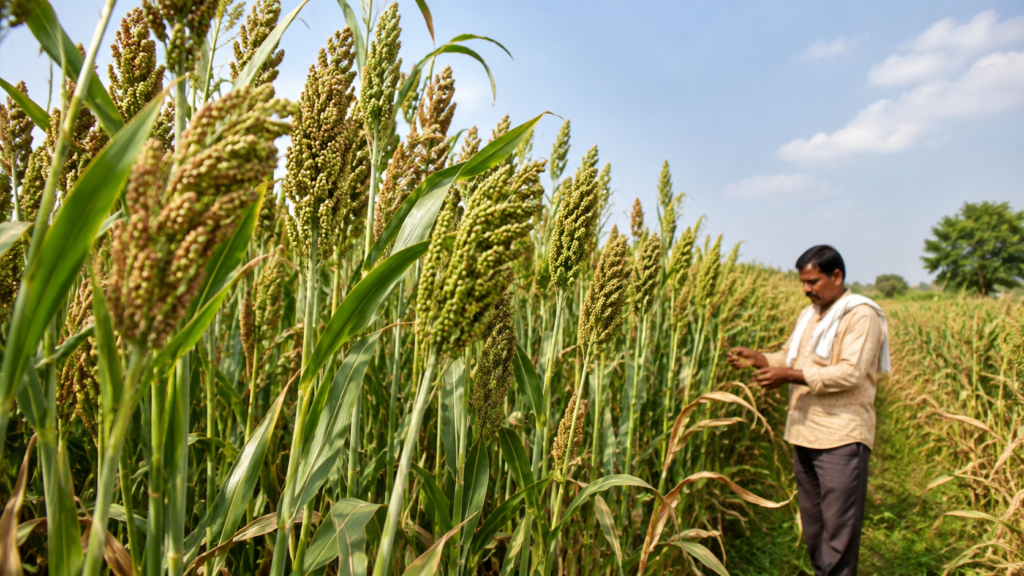
Sorghum & Sudan Grass Seeds — Complete Growing Guide
If you’re researching sorghum seeds for planting, it helps to first understand why sorghum and Sudan grass are such popular choices among farmers, especially in regions where water availability is limited. Known for their drought tolerance and high biomass yield, these crops are a favourite among dairy farmers looking for a dependable, high-volume green fodder source. If you’re considering sorghum seeds for planting this season, this guide covers everything from sowing time to harvesting tips.
Why Choose Sorghum & Sudan Grass?
Sorghum and its close relative, Sudan grass (often grown as a hybrid, sometimes called SSG), are valued for several reasons:
- Drought tolerance — they require less water compared to many other fodder crops
- High biomass yield — excellent for silage and bulk green fodder
- Multiple cuttings — regrows quickly after cutting, offering continuous supply
- Soil adaptability — grows well across a variety of soil types found in India
These qualities make sorghum an ideal choice for farmers in semi-arid regions or those looking to reduce irrigation dependency without compromising on fodder quantity.
Best Time for Sorghum Seeds for Planting
Sorghum is primarily a Kharif (monsoon) season crop in India, typically sown between June and July, right after the onset of monsoon rains. This timing allows the crop to take full advantage of natural rainfall during its early growth stages.
In regions with reliable irrigation, sorghum can also be sown slightly earlier or as a second crop later in the season, giving farmers flexibility depending on their local climate and water access.
Soil Preparation
Sorghum is fairly adaptable but performs best in well-drained loamy soil. Before sowing:
- Plough the field 2-3 times to break up soil clumps and create a fine seedbed
- Clear old crop residue and weeds
- Add farmyard manure or compost to improve soil fertility
- Ensure the field has proper drainage, as sorghum does not tolerate prolonged waterlogging
Good soil preparation significantly improves germination rates, especially in the early monsoon period when soil conditions can vary.
Sowing Method and Seed Rate
Sorghum is typically sown using the line sowing method or broadcasting, depending on the scale of farming. The recommended seed rate is generally around 20-25 kg per acre, though this can vary based on the specific variety and intended use (grain vs. fodder).
Seeds should be sown at a depth of about 3-4 cm. Maintaining proper row spacing (usually 30-40 cm apart) helps ensure healthy plant development and easier maintenance during the growing season.
Irrigation and Care
While sorghum is drought-tolerant once established, young seedlings still benefit from consistent moisture during the first few weeks. A light irrigation at sowing, followed by watering every 10-15 days depending on rainfall, supports strong early growth.
Weed control during the first 3-4 weeks is important, as sorghum seedlings can be outcompeted by faster-growing weeds before they establish themselves.
Harvesting and Cuttings
One of sorghum’s biggest advantages is its ability to provide multiple cuttings per season. The first cutting is typically ready 50-60 days after sowing, with subsequent cuttings possible every 30-35 days as the crop regrows from the base.
This regrowth ability makes sorghum and Sudan grass particularly valuable for farmers who need a steady, reliable green fodder supply throughout the monsoon and post-monsoon months.
Quick Tips for Better Yield
- Rotate sorghum with legume crops occasionally to help maintain soil nitrogen levels
- Avoid over-irrigation, as sorghum handles dry spells better than excess water
- Monitor young plants for pest activity during the first month for the healthiest stand
Conclusion
Sorghum and Sudan grass remain some of the most dependable fodder crops for Indian farming conditions, offering high yield, drought resilience, and multiple harvests per season. Whether you’re farming on a small plot or managing a larger dairy operation, understanding the right sorghum seeds for planting timeline and care practices sets the foundation for a strong, reliable fodder supply.
Looking to buy quality sorghum and Sudan grass seeds? Check out our Fodder Seeds page for the best prices per kg, with delivery across India.
For additional information on agricultural research and farming practices, farmers can also explore resources from the Indian Council of Agricultural Research (ICAR).