
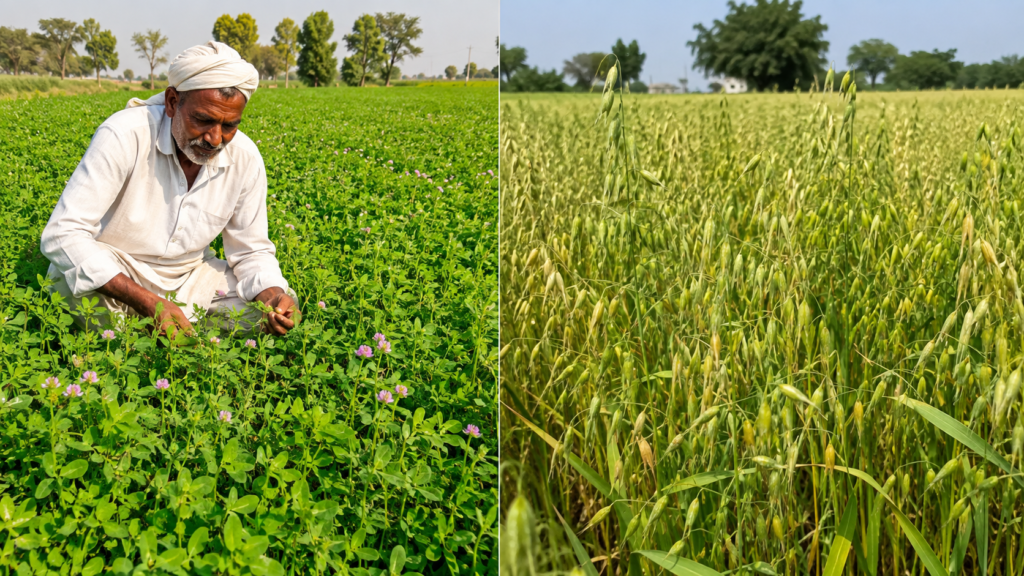
Berseem vs Oats Fodder — Which is Better for Dairy Cattle?
When it comes to choosing winter fodder crops for dairy cattle, berseem and oats are two of the most popular options among Indian farmers. Both are nutritious, easy to grow, and widely available — but they serve slightly different purposes depending on your farm’s needs. In this berseem vs oats fodder comparison, we break down the key differences to help you decide which crop suits your cattle best.
Nutritional Value Comparison
Berseem is known for its high protein content, often ranging between 18-20%, making it an excellent choice for boosting milk production in dairy cattle. It is soft, palatable, and easily digestible, which is why cattle tend to consume it readily.
Oats, on the other hand, offer a good balance of fiber and moderate protein (around 10-12%). While oats may not match berseem’s protein levels, they provide essential fiber that supports healthy digestion, especially when mixed with other high-protein fodder.
Verdict: If your main goal is boosting milk yield, berseem has the edge. If you need a fiber-rich supplement to balance the diet, oats are a strong complementary choice.
Sowing Season and Growing Conditions
Both crops are grown during the Rabi (winter) season in India, typically sown between October and November.
- Berseem prefers well-drained loamy soil with a neutral pH and requires regular irrigation every 10-15 days.
- Oats are slightly more tolerant of varying soil conditions and can handle marginally drier spells better than berseem, making them a safer choice in regions with limited irrigation.
Yield and Number of Cuttings
One of berseem’s biggest advantages is its ability to provide multiple cuttings — often 5-6 cuttings in a single season when managed well, giving farmers a continuous supply of green fodder for months.
Oats typically offer fewer cuttings, usually 2-3 per season, but each cutting tends to produce a substantial, fibrous yield that works well for silage or dry fodder preparation.
Cost and Availability
Both berseem and oats seeds are widely available and reasonably priced across India, making them accessible to small and large dairy farmers alike. Berseem seed rates are generally slightly higher due to the crop’s higher cutting frequency and reseeding needs, while oats tend to be a more economical option for farmers looking for a single robust harvest.
Which One Should You Choose Berseem vs Oats Fodder ?
The truth is, berseem and oats work best together rather than as a either-or choice. Many experienced dairy farmers grow both crops side by side or in rotation:
- Use berseem as your primary green fodder source for high protein and consistent milk yield
- Use oats as a fiber-rich supplement, especially useful during periods when berseem cuttings are still growing back
This combination ensures a balanced diet for your cattle throughout the season, covering both protein and fiber needs without over-relying on a single crop.
A simple practice many farmers follow is sowing berseem and oats in adjacent plots, so as one crop is being cut for feeding, the other continues growing — ensuring a steady, uninterrupted fodder supply all winter long.
“Here’s a quick side-by-side look at the berseem vs oats fodder comparison:”
Quick Comparison Table
| Factor | Berseem | Oats |
|---|---|---|
| Protein Content | High (18-20%) | Moderate (10-12%) |
| Cuttings per Season | 5-6 | 2-3 |
| Soil Tolerance | Needs good drainage | More tolerant |
| Best For | Milk yield boost | Fiber & digestion support |
Conclusion
Choosing in the berseem vs oats fodder debate doesn’t have to be an either-or decision.. Understanding their individual strengths — berseem’s protein power and oats’ fiber contribution — allows you to build a balanced, cost-effective feeding strategy for your dairy cattle.
Looking to buy quality berseem or oats seeds? Check out our Fodder Seeds page for the best prices per kg, with delivery across India.
For additional information on agricultural research and farming practices, farmers can also explore resources from the Indian Council of Agricultural Research (ICAR).