
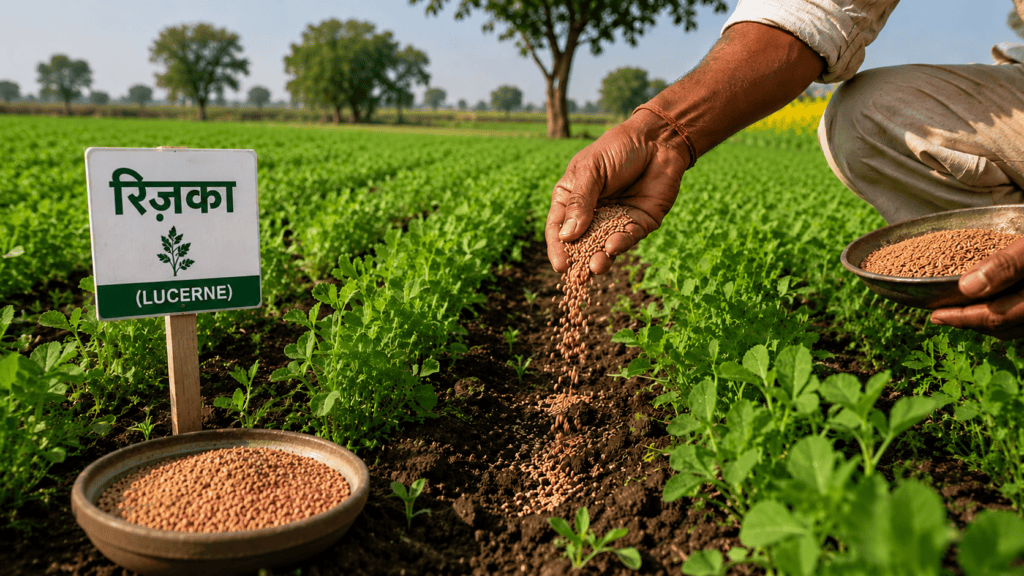
lucerne seeds sowing time
Lucerne, also known as alfalfa, is one of the most valuable fodder crops grown by dairy farmers across India. Known for its high protein content and multiple cuttings per season, lucerne seeds are a smart investment for anyone looking to boost cattle nutrition and milk yield. If you’re planning to grow lucerne on your farm, knowing the right sowing time and season is the first step toward a successful harvest.
Best lucerne seeds sowing time
Lucerne grows best when sown during the Rabi (winter) season in India, typically between October and November. This timing allows the crop to establish itself before the colder months and take full advantage of the winter growing period. In regions with milder climates, lucerne can also be sown slightly earlier, in late September, to ensure strong root development before winter sets.
Farmers looking to buy lucerne seeds for sale in India should plan their purchase at least 2-3 weeks before the sowing window to allow time for land preparation.
Soil Preparation for Lucerne Seeds
Lucerne prefers well-drained, fertile soil with a neutral to slightly alkaline pH (6.5-7.5). Before sowing:
- Plough the field 2-3 times to create a fine tilth
- Remove weeds and old crop residue
- Add well-rotted farmyard manure to enrich the soil
- Ensure proper drainage, as lucerne does not tolerate waterlogging
Good soil preparation directly impacts germination rates and the overall health of your fodder crop.
Sowing Method and Seed Rate
Lucerne seeds are typically sown using the broadcasting method or in shallow rows for better management. The recommended seed rate is around 20-25 kg per hectare, though this can vary slightly based on soil quality and irrigation availability.
Seeds should be sown at a shallow depth of about 1-2 cm, as lucerne seeds are small and can struggle to emerge if planted too deep. After sowing, a light irrigation helps settle the soil and supports germination.
Watering and Early Care
After the first irrigation at sowing, lucerne requires watering every 10-15 days depending on soil type and weather conditions. Once established, lucerne is relatively drought-tolerant, but consistent watering during the initial growth phase is essential for a strong stand Understanding the correct lucerne seeds sowing time helps farmers avoid poor germination and crop failure..
Weed control in the first 4-6 weeks is also critical, as young lucerne seedlings grow slowly and can be easily overtaken by faster-growing weeds.
When Can You Expect the First Cutting?
Under good conditions, lucerne is typically ready for its first cutting 60-70 days after sowing. After that, it can be harvested every 25-30 days, giving farmers multiple cuttings throughout the season — making it one of the most efficient fodder crops for continuous green feed supply.
Quick Tips for Better Lucerne Yield
A few small practices can make a big difference in how well your lucerne crop performs:
- Test your soil before sowing to check pH and nutrient levels
- Avoid sowing during heavy rainfall, as excess moisture can rot the seeds
- Rotate lucerne with other crops every few years to maintain soil health
- Monitor young plants closely for pests during the first month
Following these simple steps alongside the right sowing time can significantly improve both germination rates and long-term fodder yield.
Conclusion
Knowing the right lucerne seeds sowing time — during the Rabi season between October and November — combined with proper soil preparation and care, sets the foundation for a high-yielding, nutritious fodder crop. Whether you’re a small farmer or managing a larger dairy operation, lucerne remains one of the best investments for long-term cattle nutrition.
Looking to buy quality lucerne seeds? Check out our Lucerne Seeds page for the best lucerne seeds price per kg, with delivery across India.
For additional information on agricultural research and farming practices, farmers can also explore resources from the Indian Council of Agricultural Research (ICAR).