
Chia Seeds vs Basil Seeds — What’s the Difference?
Walk into any health food store today and you’ll likely spot chia seeds and basil seeds sitting on the same shelf, often marketed as near-identical superfoods. They do look strikingly similar once soaked in water — both turn gel-like and are popular in smoothies, drinks, and desserts. But when it comes to chia seeds vs basil seeds, there are actually some meaningful differences worth knowing before you pick one over the other.
The Basic Difference
Chia seeds come from the Salvia hispanica plant, native to Central America, while basil seeds (commonly called sabja seeds in India) come from the sweet basil plant, Ocimum basilicum — the same plant used in cooking and Ayurvedic remedies. Despite the confusion, they’re not the same seed, and they don’t taste, look, or behave exactly alike once you look closer.
Appearance and Texture
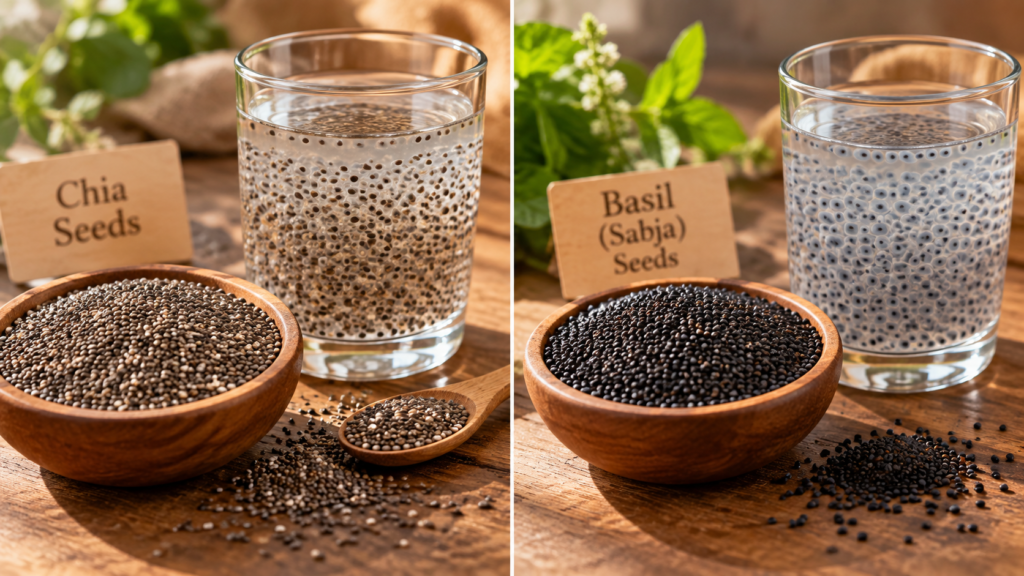
At first glance, both seeds seem interchangeable — small, dark, and covered in a gel-like coating when soaked. But there are subtle differences:
- Chia seeds are oval and slightly smaller, with a mottled brown, black, and white pattern
- Basil seeds are more uniformly black and slightly larger, forming a thicker, more mucilaginous gel when soaked
If you soak both side by side, basil seeds tend to swell up a bit more and take on a distinctly jelly-like texture faster than chia.
Nutritional Comparison
This is where the real chia seeds vs basil seeds debate gets interesting:
Chia seeds are known for their higher omega-3 fatty acid content, along with a good dose of protein and fiber. They’re often recommended for heart health and sustained energy release.
Basil seeds are lower in calories and fat compared to chia, but still offer a solid amount of fiber, along with iron and antioxidants. They’re traditionally valued in Ayurveda for their cooling effect on the body, especially popular in summer drinks.
Neither is strictly “better” — it really depends on what you’re looking for. Chia leans more toward omega-3 and protein needs, while basil seeds are often chosen for digestion and cooling properties.
Common Uses
Chia seeds are widely used in:
- Smoothies and overnight oats
- Chia puddings
- As an egg substitute in baking (mixed with water)
Basil seeds are commonly used in:
- Traditional Indian drinks like falooda and sabja sherbet
- Soaked and added to lemonade or fruit juices
- Ayurvedic home remedies for digestion and cooling the body
Which One Should You Choose?
Honestly, there’s no need to pick just one — many people rotate between both depending on the season and purpose. Chia seeds work well year-round for a nutritional boost, while basil seeds are especially popular in the summer months for their cooling effect and lighter feel.
If you’re growing your own herbs at home, both are relatively easy to cultivate, though basil seeds have the added benefit of coming from a plant that’s also useful fresh in cooking and home remedies.
A Quick Note on Sourcing and Quality
Whichever seed you choose, quality matters more than people often realize. Both chia and basil seeds should have a clean, uniform appearance without a musty smell — a sign of proper storage. Since both seeds absorb moisture easily, they’re best kept in an airtight container away from direct sunlight and humidity.
If you’re buying in bulk, it’s worth checking whether the seeds are lab-tested or sourced from a trusted supplier, especially since both are consumed regularly rather than as an occasional ingredient. Freshness genuinely affects both the taste and the gel-forming texture that makes these seeds so popular in the first place.
Quick Comparison Table
| Factor | Chia Seeds | Basil (Sabja) Seeds |
|---|---|---|
| Origin | Salvia hispanica plant | Basil plant (Ocimum basilicum) |
| Omega-3 Content | Higher | Lower |
| Best For | Protein, sustained energy | Digestion, cooling effect |
| Common Use | Smoothies, puddings | Drinks, sherbets, falooda |
Conclusion
When it comes down to chia seeds vs basil seeds, both bring genuine value to a healthy routine, just in slightly different ways. Understanding these differences helps you choose the right one for your specific needs, rather than assuming they’re simply interchangeable.
Looking to buy quality chia or basil seeds? Check out our Herbal Seeds page for the best prices, with delivery across India.
For additional information on agricultural research and farming practices, farmers can also explore resources from the Indian Council of Agricultural Research (ICAR).