
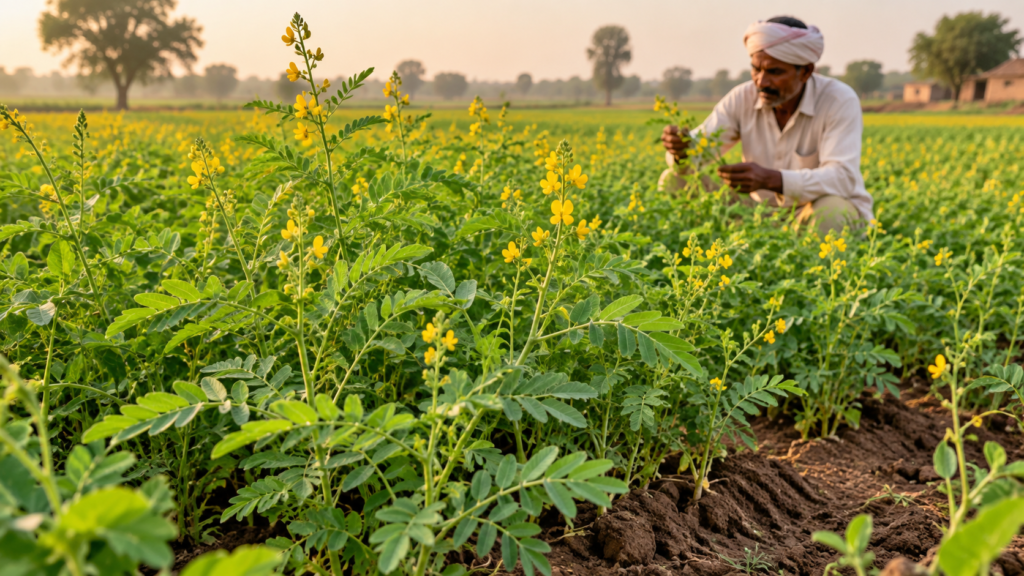
Dhaincha Seeds Uses — Green Manure and Fodder
Ask any farmer who’s dealt with declining soil fertility, and dhaincha is probably a name that comes up sooner or later. It’s one of those crops that doesn’t get as much attention as the big cash crops, but quietly does a lot of heavy lifting on the farm. If you’re trying to understand the different dhaincha seeds uses and whether this crop deserves a spot in your rotation, here’s a straightforward look at what it actually offers.
What is Dhaincha?
Dhaincha (Sesbania) is a fast-growing legume crop widely grown across India, primarily valued for its ability to improve soil health. It’s not typically grown as a food crop — instead, its real value lies in what it does for the land and, to a lesser extent, as a fodder option for livestock.
Dhaincha Seeds Uses — Green Manure
The most well-known of the dhaincha seeds uses is as green manure. Here’s why farmers rely on it so heavily for this purpose:
- Nitrogen fixation — being a legume, dhaincha has the ability to fix atmospheric nitrogen into the soil through root nodules, naturally boosting soil fertility
- Fast growth — it’s ready to plough back into the soil in as little as 45-50 days, making it one of the quickest green manure options available
- Improves soil structure — decomposing dhaincha biomass adds organic matter, which helps with water retention and overall soil texture
- Reduces dependency on chemical fertilizers — regular use of dhaincha as green manure can meaningfully cut down the need for synthetic nitrogen fertilizers over time
Farmers typically sow dhaincha before a main crop, let it grow for 6-7 weeks, then plough it directly into the field while it’s still green and tender, allowing it to decompose and release nutrients back into the soil.
Dhaincha as Fodder
While green manure is its primary use, dhaincha also has a secondary role as livestock fodder, particularly in the early growth stages when the plant is still soft and palatable. It’s not typically the first choice for dairy cattle fodder compared to crops like berseem or lucerne, but it can serve as a useful supplementary feed, especially in areas where fodder options are limited.
How to Grow Dhaincha
Best Sowing Season: Dhaincha grows well during the Kharif (monsoon) season, typically sown between June and July, though it can also be grown at other times depending on regional climate.
Soil Requirements: One of dhaincha’s biggest advantages is how adaptable it is — it tolerates a wide range of soil types, including saline and waterlogged conditions where many other crops struggle.
Sowing Method: Seeds are usually broadcast across the field at a rate of about 20-25 kg per acre, then lightly covered with soil. Germination is quick, often within 5-7 days under good moisture conditions.
Care: Dhaincha requires minimal maintenance once established. It doesn’t demand heavy irrigation and is fairly resistant to common pests, which is part of why it remains a low-effort, high-benefit crop for soil improvement.
Quick Tips
- Plough dhaincha into the soil while it’s still green and succulent for maximum nutrient release
- Avoid letting it flower and set seed if the goal is green manure, as older plants decompose more slowly
- Rotate dhaincha with your main crop every 1-2 seasons for consistent soil health benefits
Conclusion
Understanding the practical dhaincha seeds uses makes it clear why this crop remains a quiet favorite among farmers focused on long-term soil health. Whether you’re looking to reduce fertilizer costs, improve soil structure, or add a supplementary fodder option, dhaincha offers a simple, low-maintenance way to give your land a natural boost.
Looking to buy quality dhaincha seeds? Check out our Fodder Seeds page for the best prices per kg, with delivery across India.
For additional information on agricultural research and farming practices, farmers can also explore resources from the Indian Council of Agricultural Research (ICAR).