
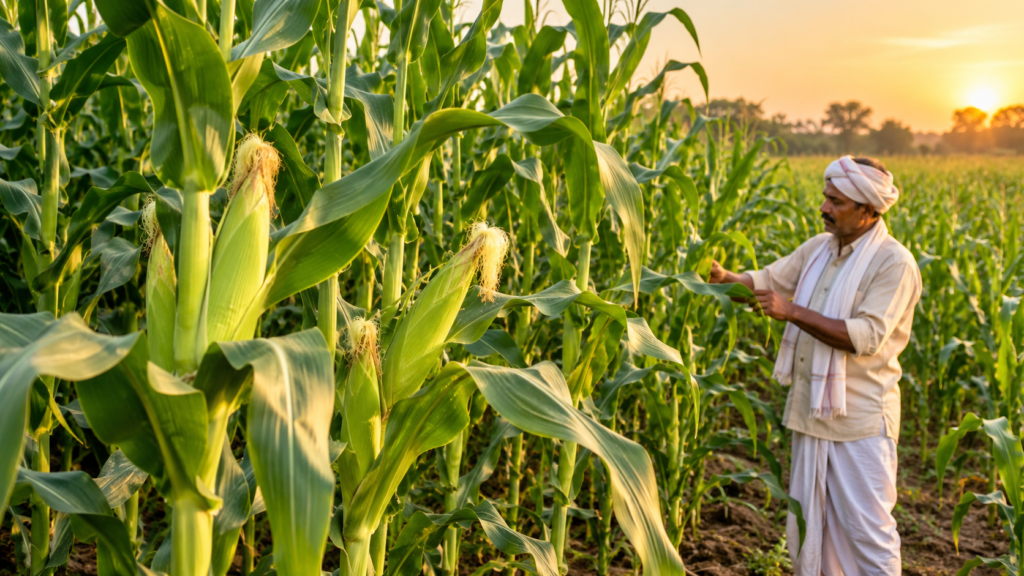
Maize (Corn) Seeds for Fodder — Complete Guide
Maize seeds price is usually the first thing farmers ask about when planning a fodder crop, and it’s a fair question — but the price only makes sense once you know what you’re actually getting for it. Maize, or corn, has been a dependable fodder crop across India for decades, valued for its fast growth, high green biomass, and the energy-rich feed it gives dairy cattle. This guide walks through how maize works as a fodder crop, how to grow it well, and what to keep in mind before you buy.
Why Maize Works So Well as Fodder
Maize is one of those crops that quietly does a lot of things right. It grows quickly, produces a large volume of green fodder per acre, and cattle generally like the taste. A few reasons farmers keep coming back to it:
- High green biomass — maize gives a bulky, filling fodder that keeps cattle well fed
- Energy-rich — the sugars in the plant make it a good source of energy, especially useful for dairy animals
- Silage friendly — maize is one of the best crops for making silage, letting you store fodder for lean months
- Adapts to different conditions — it grows across a wide range of soil types and climates
Unlike protein-heavy crops such as lucerne or berseem, maize is mainly an energy source, so many farmers pair it with a legume fodder for a balanced diet.
Understanding Maize Seeds Price — What Affects It
When comparing maize seeds price, it helps to know why the numbers vary so much from one supplier to another. A few factors usually decide it:
- Seed type — hybrid varieties generally cost more than open-pollinated ones, since they’re bred for higher yield and uniform growth
- Purpose — seeds sold specifically for fodder (like African Tall varieties) are priced differently from grain or sweet corn seeds
- Quality and germination rate — certified, tested seeds cost a little extra but save you from patchy fields and re-sowing
- Pack size — buying in larger quantities normally brings the per-kg cost down
The cheapest option isn’t always the best value. A slightly higher maize seeds price for seed with a strong germination rate often works out cheaper in the end, because you get an even, healthy stand without gaps.
Best Time and Method for Sowing Maize
Maize is mainly a Kharif (monsoon) crop, sown between June and July when the rains begin. In areas with good irrigation, it can also be grown in the summer season, giving farmers an extra fodder cycle.
Soil: Well-drained loamy soil works best. Avoid fields where water stands for long, as maize doesn’t like waterlogging.
Seed rate: For fodder purposes, around 30-40 kg per acre is common, sown closer together than you would for grain maize, since the goal is green biomass rather than cobs.
Sowing: Line sowing with a spacing of roughly 30 cm between rows gives even growth and makes weeding easier. Seeds should go in at a depth of about 4-5 cm.
Care and Harvesting
Maize responds well to a little attention in the early weeks. Keep the field free of weeds for the first month, and irrigate every 8-10 days if rainfall is patchy. A light dose of nitrogen fertilizer, or well-rotted farmyard manure worked in before sowing, helps the crop grow tall and leafy.
For fodder, the crop is usually harvested around 50-60 days after sowing, when the plants are tall and still green and soft. Cutting at this stage gives the best balance of yield and palatability. Waiting too long makes the stalks tougher and less appealing to cattle.
Quick Tips for Getting More from Your Maize Fodder
- Sow in staggered batches every 10-15 days so you always have fresh fodder ready
- Mix maize fodder with berseem or lucerne to balance energy and protein
- Chop the fodder before feeding to reduce wastage and improve digestion
- Compare maize seeds price across sellers, but always check germination rate and purity along with it
Conclusion
Maize remains one of the most practical fodder crops for Indian dairy farmers, thanks to its quick growth, high yield, and versatility. Knowing what shapes maize seeds price helps you buy smartly, choosing seed that gives strong, reliable growth rather than just the lowest number on the label.
Looking to buy quality maize seeds? Check out our Fodder Seeds page for current prices, with delivery across India.
For additional information on agricultural research and farming practices, farmers can also explore resources from the Indian Council of Agricultural Research (ICAR).