
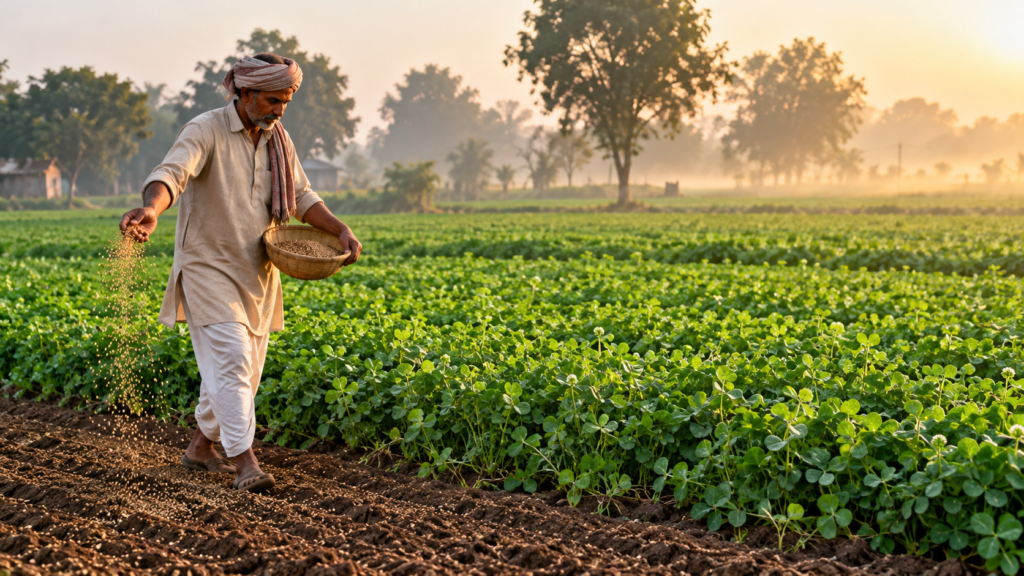
Berseem Seeds: Sowing Time, Seed Rate and Care
Berseem seeds sowing time is the one decision that shapes the whole season, because sow too late and you lose cuttings, sow too early in leftover heat and the seedlings struggle. Berseem is the backbone of winter green fodder for dairy farmers across north and central India, loved for its soft leaves, high protein and repeated cuttings. Get the timing, seed rate and early care right, and a single acre can keep your animals fed for months. This guide walks through the whole process in simple steps, from preparing the field to the first cutting.
Best Berseem Seeds Sowing Time
In most parts of India, the ideal time for sowing berseem is October to November, once the hot weather has passed and night temperatures begin to fall. Berseem is a cool-season crop, so it germinates and grows best when the weather is mild.
- Early to mid October is the sweet spot in many regions, because the crop gets a longer growing period and gives more cuttings
- After mid-November you can still sow, but every week of delay usually means one cutting fewer
- In warmer regions, wait until daytime temperatures come down properly instead of sowing into leftover heat, or the stand can turn out weak and patchy
Local weather matters more than the calendar. If winter arrives early in your area, you can start a little sooner, and if it stays warm for longer, hold back a week or two.
Soil and Field Preparation
Once you have fixed your berseem seeds sowing time, the next job is getting the field ready. Berseem grows well in loamy soil with good drainage and a near-neutral pH. It does not like standing water for long, so avoid low patches that stay wet. Before sowing:
- Plough the field two or three times and level it well so that water spreads evenly
- Remove weeds and old crop stubble
- Mix in well-rotted farmyard manure for better soil structure
- Apply a basal dose of phosphorus as per your soil test, since berseem responds well to it
Because the seed is very small, a fine and well-levelled seedbed makes a big difference to how evenly it germinates.
Seed Rate and Seed Treatment
The usual seed rate for berseem is around 8-10 kg per acre (roughly 20-25 kg per hectare), though it can vary with the variety and how well the field is prepared. Quality matters as much as quantity:
- Choose seed with high germination and good purity, free of weed seeds such as kasni (chicory)
- Treat the seed with Rhizobium culture before sowing, which helps the roots fix nitrogen and often improves growth
- Do not cut corners on the seed rate, because sowing too thin leaves gaps that weeds fill very quickly
How to Sow Berseem
Two methods are common. In broadcasting, seed is scattered evenly over a levelled field with a shallow layer of water or moist soil, then left to settle. In line sowing, seed goes into shallow rows, which makes weeding and irrigation easier.
Either way, keep the seed shallow, around 1-2 cm deep, because deeper sowing slows down or stops germination. Mixing the seed with fine sand or dry soil before scattering helps you spread it evenly. If moisture is right, germination usually begins within 5-7 days.
Irrigation and Care
Give a light irrigation right after sowing, and then water every 10-15 days depending on soil and weather. Berseem needs regular moisture, but the field should never stay waterlogged.
- Watch for weeds in the first month, and remove them early
- Irrigate soon after every cutting, which helps the crop regrow faster
- Keep an eye on the crop for pests and take advice from your local agriculture office if you notice a problem
Cuttings and Harvesting
Counting from your berseem seeds sowing time, the first cutting is usually ready around 50-60 days later, and further cuttings follow every 25-30 days. With good care you can expect around 5-6 cuttings in a season. Cut about 5-7 cm above the ground so that the plants regrow quickly.
Berseem is softest and richest when young, so feed it in moderate quantity and mix it with dry fodder or a fibrous green crop such as oats to keep digestion comfortable for your animals.
Berseem Sowing at a Glance
| Factor | Guide |
|---|---|
| Sowing time | October to November |
| Seed rate | 8-10 kg per acre |
| Sowing depth | 1-2 cm |
| Irrigation | Every 10-15 days |
| First cutting | 50-60 days |
| Total cuttings | Around 5-6 |
Common Mistakes to Avoid
- Missing the berseem seeds sowing time window and sowing very late in November or December
- Sowing too deep, which leads to poor and uneven germination
- Letting water stand in the field for long periods
- Skipping seed treatment or buying low-purity seed to save a little money
- Feeding large amounts of fresh berseem on its own without any dry fodder
Conclusion
Getting the berseem seeds sowing time right is half the job done. Add a proper seedbed, the right seed rate, regular light irrigation and timely cuttings, and berseem rewards you with soft, protein-rich green fodder through the whole winter. October and November are the months to act, so plan your field and your seed purchase a little ahead of the sowing window.
Looking to buy quality berseem seeds? Check out our Fodder Seeds page for the best prices per kg, with delivery across India.