
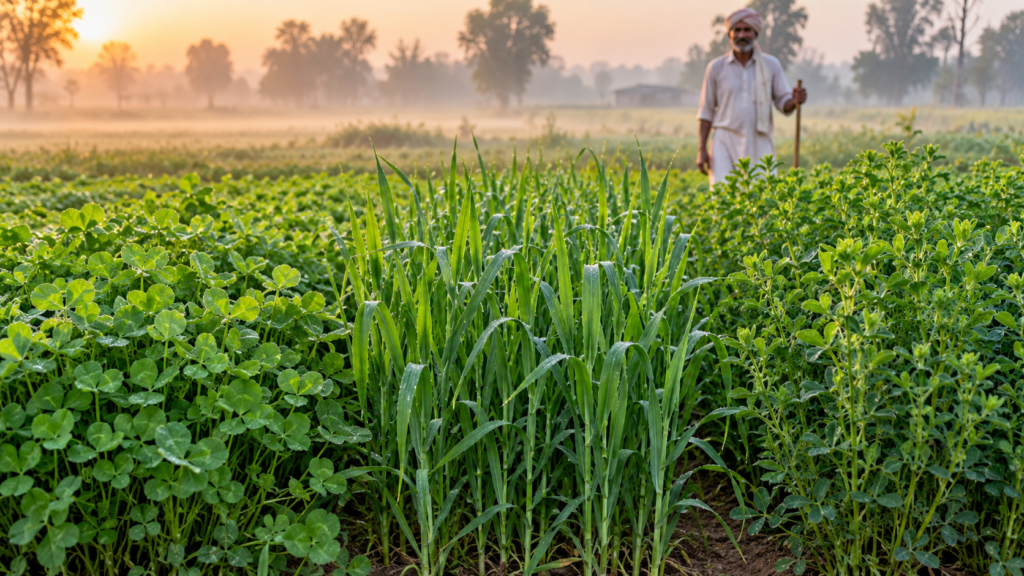
Best Rabi Fodder Crops in India: Berseem, Oats and Lucerne
Rabi fodder crops are what keep dairy cattle well fed through the cooler months, and October is exactly the time when farmers have to decide what to sow. Berseem, oats and lucerne are the three names that come up in almost every conversation about winter fodder in India. Most farmers already have a favourite, but each of these crops does a slightly different job in the feeding plan. This guide compares them in plain terms, so you can pick the right mix for your land, your water and your herd before the sowing window closes.
What Makes a Good Rabi Fodder Crop?
Rabi crops are sown after the monsoon, usually in October and November, and they grow through the cool, dry months before being cut in late winter and early spring. Not every crop that grows in winter makes good fodder, though. When farmers pick among rabi fodder crops, they usually look at four things:
- Nutrition – protein for milk yield, fiber for healthy digestion
- Regrowth – a crop that gives several cuttings saves you from re-sowing again and again
- Palatability – cattle should actually enjoy eating it, otherwise a lot goes to waste
- Fit with your farm – irrigation, soil type and how much land you can spare
Berseem, oats and lucerne tick most of these boxes, which is why they have stayed popular for so long.
Berseem – The Winter Favourite
If there is one name that defines rabi fodder crops in India, it is berseem. It is a leafy legume, soft and very palatable, and cattle generally take to it without any fuss.
- Protein-rich – a good choice when the goal is better milk yield
- Multiple cuttings – with good irrigation it can give around 5-6 cuttings in a season
- Improves soil – being a legume, it adds nitrogen back into the field
- Sowing time – October to November, in well-drained loamy soil with irrigation every 10-15 days
One practical tip: young, fresh berseem is very rich, so do not feed it in large quantities on its own. Mixing it with some dry fodder or a fibrous green crop keeps digestion comfortable for the animal.
Oats – Fiber for a Balanced Diet
Oats are the simple, dependable member of this group. They are easy to grow, handle cool weather well, and give a fibrous green fodder that complements protein-heavy crops nicely.
- Fiber-rich – supports digestion and helps balance a protein-heavy ration
- Easy to grow – does not need much fuss once the seeds are in the ground
- Cuttings – usually 2-3 per season, each with a good bulky yield
- Sowing time – October to mid-November
Oats are also handy when you want to make hay or silage out of the extra growth, since the plant is sturdy and holds its shape well.
Lucerne – The Long-Term Protein Source
Lucerne, also called alfalfa, is a little different from the other two because it is a perennial crop. Once you establish a good stand, it keeps producing for several years instead of just one season.
- High protein – one of the best green fodder options for dairy cattle
- Deep roots – helps it handle short dry spells better than many other fodder crops
- Frequent cuttings – the first cut comes around 60-70 days after sowing, then roughly every 25-30 days
- Sowing time – October to November, in well-drained soil (it does not like standing water)
Lucerne asks for a bit more care at the start, but it rewards the effort with a steady supply of green fodder for a long time.
Berseem vs Oats vs Lucerne at a Glance
| Crop | Main strength | Cuttings | Best for |
|---|---|---|---|
| Berseem | High protein, very palatable | 5-6 per season | Boosting milk yield |
| Oats | Fiber, easy to grow | 2-3 per season | Balanced diet, hay or silage |
| Lucerne | Long-lasting protein source | Many, over several years | Permanent fodder plot |
Tips for Planning Your Rabi Fodder Crops
- Mix and match – berseem and oats are commonly grown together, giving protein and fiber in the same cutting
- Stagger your sowing – sow in batches every 10-15 days so that fresh fodder is ready at different times instead of all at once
- Check seed quality – good germination and purity matter more than saving a few rupees per kg
- Do not delay too much – sowing late into November can reduce the number of cuttings you get
Conclusion
There is no single winner among rabi fodder crops, because berseem, oats and lucerne each solve a different problem. Berseem gives palatable protein, oats add fiber and ease, and lucerne builds a long-term protein source. Most dairy farmers get the best results by using two or even all three, based on their land and water. Whatever mix you choose, October and November are the months to act.
Looking to buy quality berseem, oats or lucerne seeds? Check out our Fodder Seeds page for the best prices per kg, with delivery across India.